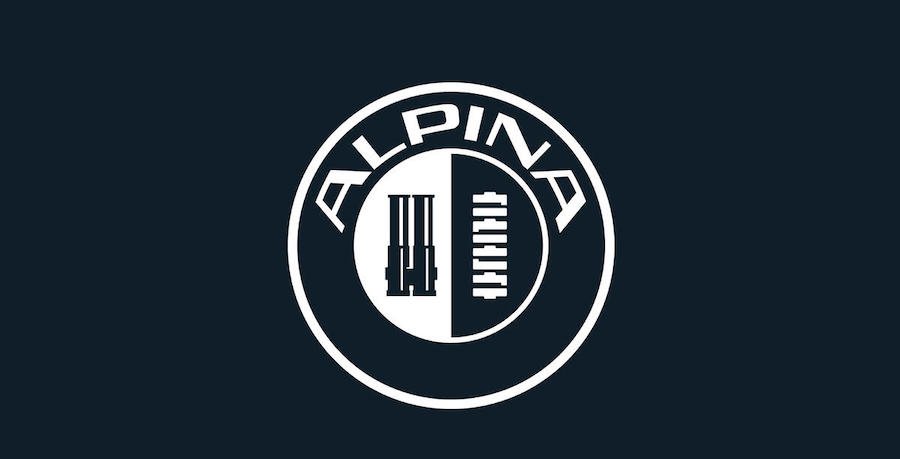
BMW this week unveiled a new logo for Alpina, which was first discovered in trademark filings by CarBuzz last year, and the new design may just upset some brand loyalists.
At first glance, it doesn’t look like much has changed. But look closer, and it becomes clear there’s practically nothing from the old logo that hasn’t been replaced or retouched.
New Logo Shows Nothing Is Too Sacred
Alpina is a performance marque that also places a weighty focus on comfort, which has helped separate it from BMW’s M division, which it actually predates. Alpina was founded in 1965, and its original logo was introduced shortly after, featuring stylized depictions of the company’s first two products: a throttle body and a crankshaft. They appear on a red and blue shield, thought to be a nod to the official coat of arms of the German state of Bavaria, where both Alpina and BMW are based.
The new logo does away with a lot of that. The biggest departure is a move to a circle instead of a shield, with an outer ring and the “ALPINA” script retained. The result makes the new logo look a lot more like BMW’s own roundel, which no doubt was the intention. The finer details have been simplified and the logo itself made flatter, and combined with a transparent effect and a reduction of colors, BMW says it looks more modern. The goal, according to the automaker, was to link Alpina’s heritage with its future.
A lot of automakers have been revising their logos recently in similar fashion. It’s mostly due to the increasingly digital mediums where logos appear, such as digital gauge clusters, infotainment screens, and online. Older intricate logos tend to lose clarity and, at times, aren’t as instantly recognizable when a user is scrolling fast or flipping through menus. While most brands are shifting toward a flatter look, as in Alpina’s case, Honda has gone as far as to switch to a completely new design for its iconic H logo.
New Design For Signature Wheels, Too
BMW has also chosen another signature Alpina design to renew: the brand’s signature 20-spoke wheels. The original design was devised by Alpina founder Burkhard Bovensiepen during the company’s earliest days, as a way to set Alpina vehicles apart from the rest of the BMW fleet. The so-called starburst pattern has changed very little since then, aside from growing in size to meet modern demands. The new design hasn’t been fully revealed, but based on this single teaser image, it appears to feature a diamond-cut finish with gloss-black accents.
What's Next For Alpina
Under BMW, Alpina will operate as BMW Alpina. The original company will remain in place, handling some vehicle development along with the service, parts, and accessories side of the business. BMW, however, will now be able to use the Alpina name on vehicles it develops and manufactures independently. That isn’t a radical shift, since the two firms have worked closely for decades, with BMW selling Alpina models through its own dealerships in some markets.
What will change is volume: production is expected to increase as Alpina vehicles move to full manufacturing at BMW’s own plants, eliminating the previous bottleneck created by Alpina’s limited facilities. BMW hasn’t said when the first new BMW Alpinas will roll out, noting only that the initial focus will be on building up the brand. Still, we may already have a hint of what’s coming. Trademark filings from last December point to several potential models, including an Alpina XB8 – possibly a luxury-minded replacement to the BMW XM.
Related News
