BMW M Won't Make The Same Mistake With Engines As Mercedes-AMG
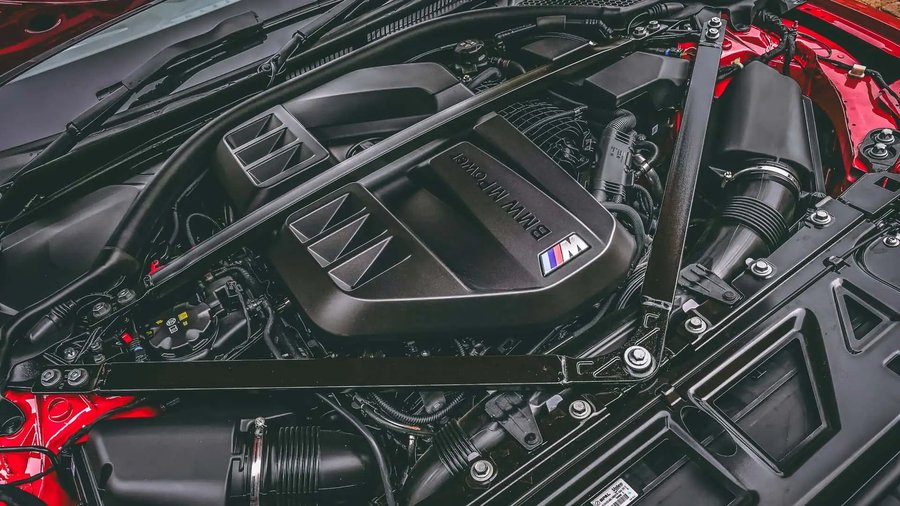
According to a new report from Autocar, M Division’s line-up will not only comply with the updated Euro 7 standards, but also, as BMW M CEO Frank Van Meel explains, will do so without affecting overall performance. As such, there are no plans to replace the straight-sixes and V8s synonymous with the M division with smaller-capacity engines. Indeed, when asked if BMW would consider smaller powertrains with engines using three or four cylinders, Van Meel simply said no.
“The six-cylinder in-line engine is our legacy, and the V8 has got a long history in racing, so we intend to keep going… I couldn’t imagine putting a four-cylinder in an M5.”
-BMW M CEO Frank Van Meel, speaking with Autocar
“Specific Mindset” of M Cars Means V8s Are Here To Stay
Introduced as Euro 1 in 1992 and requiring that all new cars be sold with catalytic converters, the European emission standards regulate, and heavily limit, the amount of harmful pollutants being produced by brand-new vehicles. Levels outlined in the current iteration of these standards – Euro 7, which came into effect on July 1 – are largely unchanged over those outlined in Euro 6 (introduced in 2014).
Now though, new vehicles are expected to comply for up to 10 years or 124,000 miles, twice as long as before, with levels tested across a much wider range of scenarios to better reflect real-world driving. This now includes emissions comprised of particulate matter, i.e. brake and tire wear. All of which makes life quite difficult if you’re a German performance sub-brand famous for turbocharged V8s that melt tires and burn through brake pads.
Van Meel was adamant, however, that BMW M’s engine would be both EU7 compliant and “keep performance.” Though the M CEO did not explain how this would be done, apparently some interesting changes have been made to ensure that environmental targets did not overwhelm performance expectations, or erode the expectations for M cars in terms of torque delivery, rev ranges and overall mass. This effectively draws a line through the approach of other carmakers, which have begun leaning more heavily on smaller engines and hybrid technology to stay within the lines.
Famed as some of the greatest driver's cars ever made, M-designated BMWs are powered by some seriously awesome engines – here are the best.
Though not stated, Mercedes-Benz's decision to introduce its new AMG C63 in 2024 with a hybrid four-cylinder in place of the more characterful turbocharged V8 could be a contributing factor. This decision turned potential customers away in droves, and even forced Mercedes to course-correct earlier this year.
New App Upgrade Tells You How Badly You’re Hurting The Environment
In further emissions-related news, the BMW Group has launched an upgrade to both the My BMW App and Mini App to help its European customers measure the carbon impact of their vehicles. The app analyzes trips completed by the vehicle and, by measuring the amount of fuel consumed, works out the amount of C02 emitted on these journeys. The app is not exclusive to ICE vehicles either. The environmental impact of hybrid BMW and Minis can also be measured by comparing the fuel consumed on a journey versus the amount of battery power depleted.
To help promote the Group’s ever-increasing EV range, the My BMW app also allows customers to compare how their current ICE/PHEV model compares with an all-electric vehicle on their day-to-day journeys. After the vehicle has completed either 200 journeys or 1,240-plus miles, the app analyses the route, works out how far an equivalent EV would go on a single charge, and points out available charging points along the way too.
