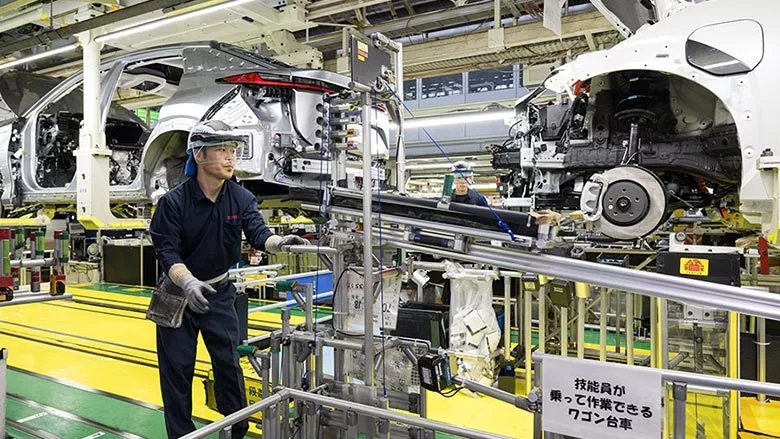
Shipping routes, raw-material supplies, and industrial logistics networks are all facing mounting pressure as the crisis drags on, with new disruptions continuing to surface across multiple sectors. For the auto industry, Toyota has emerged as one of the companies hardest hit so far, with the Nikkei reporting this week that te Japanese automaker has already been forced to scale back production multiple times.
According to the Japanese news daily, Toyota’s planned production cuts at present total roughly 83,000 vehicles through November. That figure is more than double the 38,000-unit reduction the automaker announced in early March, just weeks after the conflict began. Toyota reportedly cited rising energy costs and weakening demand across parts of the Middle East and Asia as the primary reasons behind the cuts, with the bulk of the reductions expected to come from plants in Japan.
The cuts primarily affect the Toyota RAV4 and light commercial vehicles built on Toyota’s Innovative International Multipurpose Vehicle (IMV) platform, many of which were destined for markets in the Middle East and Asia. Other models impacted include the ProBox delivery van and the Corolla Touring compact wagon, both of which have also seen production scaled back as Toyota adjusts output to match shifting regional demand and ongoing supply-chain disruptions.
Several other automakers, most notably Japanese brands including Nissan, Mazda, and Subaru, have also announced production cuts, export suspensions, or reduced output tied to the Middle East conflict, though on a much smaller scale than Toyota.
The Crisis Isn’t Slowing Every Vehicle
The conflict and the resulting spike in energy prices are also driving more buyers toward electric vehicles and fuel-efficient hybrids, and here Toyota is actually benefiting. According to the Nikkei, Toyota is ramping up production and export volumes for the Toyota Prius along with several battery-electric models as demand shifts toward more efficient vehicles.
Reuters also reported last week that EV sales in Europe jumped 34% year-over-year in April, with affordable Chinese automakers such as BYD emerging as some of the biggest beneficiaries of the surge.
In its most recent financial forecast released in May, Toyota said it still expects to deliver roughly 10 million vehicles during the current fiscal year, which is actually up 1% over the previous year. Even so, the automaker warned that net profit is projected to fall 22% to around 3 trillion yen (approximately $18.9 billion), as it grapples with issues related to the Middle East conflict alongside mounting pressure from US tariffs. And as the latest round of production cuts has alrea
