The New Audi Q3 Plug-In Hybrid Has Double The Electric Range, Fast Charging
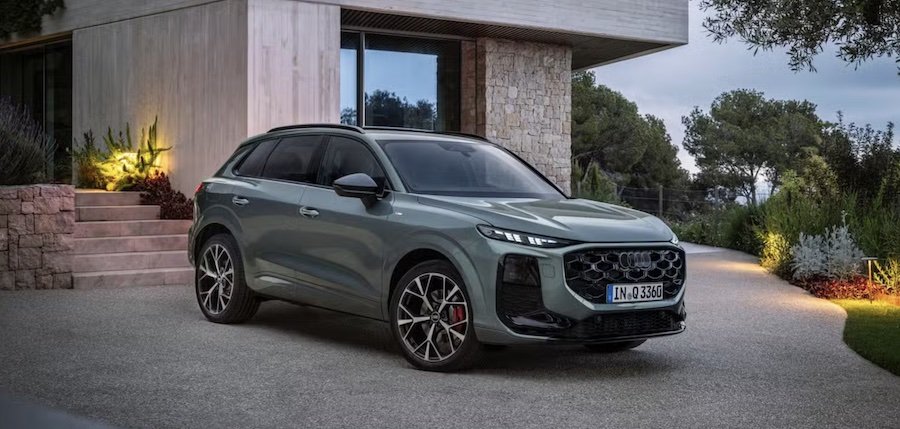
The new Audi Q3 plug-in hybrid can drive up to 74 miles on electricity (WLTP). It can also be DC fast charged, with a top-up to 80% taking less than half an hour. The high-voltage battery has nearly double the capacity of its predecessor, but the physical size is the same.
The Audi Q3 compact crossover is now in its third generation, and it comes with all the bells and whistles that you can imagine, including steering wheel stalks that are actually buttons. I’ll get to that later, but now I want to focus on what powers the new Q3.
The new generation is available in Europe with a single plug-in hybrid version, as well as a regular gas mild hybrid and diesel (yes, that’s still a thing). Dubbed the Q3 SUV e-hybrid 200 kW, the compact PHEV puts down exactly that: 200 kilowatts (268 horsepower) of power and 295 pound-feet (400 Newton-meters) of torque, thanks to a 1.5-liter gas engine that works in tandem with an electric motor.
Available only with front-wheel drive, the PHEV’s electric motor is sandwiched between the combustion engine and the six-speed automatic transmission. The high-voltage battery is located under the rear bench seat, in front of the gas tank that’s under the trunk floor.
Compared to the outgoing plug-in hybrid Q3, the new model’s battery is nearly double in capacity, all while being roughly the same physical size as before. Now, the Q3 e-hybrid packs a total of 25.7 kilowatt-hours, up from the previous model’s 13 kWh, while the usable capacity is rated at 19.7 kWh. This results in a WLTP-rated all-electric range of up to 74 miles (119 kilometers) on a full charge, whereas the old model could only manage up to 30 miles (49 km), at least on paper.
The new Q3 PHEV also gets fast charging, which wasn’t available before. Through a CCS connector, the high-voltage battery can accept up to 50 kW of power from a DC fast charger. Audi says the crossover’s battery can be charged up to 80% state of charge in less than half an hour in ideal conditions, which isn’t bad at all.
Now, it’s worth noting that what you’ve read so far is relevant for the European market. In fact, Audi doesn’t even sell the previous-generation Q3 PHEV in the United States, but that might change with the latest model, seeing how the German automaker said it wants to boost its PHEV game globally. And what better way to do that than to offer an entry-level model?
Design-wise, the third-gen Q3 looks nearly identical to its bigger brother, the Q5. Both get split headlights, while Q3 differentiates itself at the rear through a split light design with a pair of OLED taillights and a full-width LED light strip below.
Inside, the Q3 gets a rather peculiar pair of steering wheel stalks. To save some space on the center console, Audi moved the shift lever to the right side of the steering column, while all the other features were moved to the left. Moreover, the stalks are actually buttons with haptic feedback instead of traditional levers, and the controls for the windshield wiper timer were bundled onto a little rotating wheel.
Unlike the larger Q5 that can be specced with three displays, the Q3 can only be had with a more traditional two-screen setup. There’s a 12.8-inch touchscreen for the infotainment, as well as an 11.9-inch display for the digital gauge cluster. Additionally, a head-up display can beam relevant information directly onto the windshield.
The standard suspension setup comes with a simple damper and spring combo, while the options list includes a sports suspension with two-valve damper control. The base models come with 17-inch wheels, while the top trim gets 20-inchers. The tire width has also been increased from 215 to 235 millimeters, while the drag coefficient has been lowered from 0.32 to 0.30.
