Honda's Boring New Patent Just Made UTVs Even More Practical
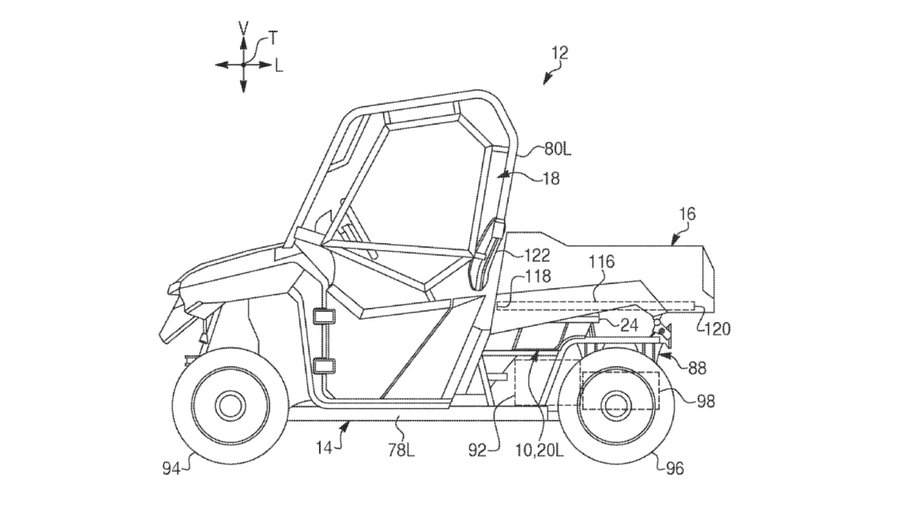
Honda just filed a new UTV patent, and it’s the most Honda thing Honda could possibly do. No wild styling. No lifestyle fluff. Just a smarter way to squeeze more real-world usefulness out of a machine that already exists to get work done.
The patent describes a UTV with a tilt (dump) bed and a storage bin tucked neatly underneath it. That alone isn’t revolutionary. What makes this interesting is how Honda links the two mechanically, turning a simple storage box into something safer, smarter, and genuinely more practical.
Here’s the trick. The under-bed storage bin has a pivoting lid, but that lid can only open when the dump bed is tilted. When the bed is in its normal, lowered position, the bed itself physically blocks the lid from opening. Tip the bed up, and suddenly the storage is accessible. It’s a small idea, but it solves multiple problems at once.
First, of course, is safety. If the bed is loaded with dirt, gravel, or tools, Honda doesn’t want that lid popping open underneath and getting smashed, jammed, or worse, injuring someone. Bed down means storage locked out, automatically, no latches or reminders needed.
Second is packaging. UTVs live and die by space efficiency. Honda found a way to use volume that normally sits wasted between the frame rails, without raising the bed, widening the vehicle, or bolting on awkward external boxes. The weight stays low, centered, and protected. And the design makes good use of space that would otherwise serve no purpose.
Third is durability. This system is mostly geometry and mechanical interference, not electronics or sensors. That matters if you’re building vehicles meant to live on farms, trails, and job sites where mud, water, and neglect are just part of the deal.
Reading through the drawings and descriptions, it’s clear Honda isn’t chasing novelty here. This is about making sure tools, straps, recovery gear, or hunting equipment have a dedicated, secure home without compromising the bed’s primary job. Dump bed first, storage second.
And that mindset is very on brand for Honda. Honda’s UTVs have never tried to out-flex or out-flash the competition. Instead, they earn trust by being easy to live with and hard to break. This patent fits right into that philosophy. It’s the kind of thing owners might not even notice on day one, but absolutely appreciate after months of use.
There’s also a bigger implication here. As UTVs slowly electrify or hybridize, packaging becomes everything. Batteries, motors, and power electronics eat space fast. Efficient layouts like this give Honda more flexibility down the road, without forcing customers to give up utility.
So will this show up on the next Pioneer refresh? A future electric Honda side-by-side? Hard to say. But if history is any guide, this patent won’t stay theoretical for long.
Related News
